Monthnotes February 2026

Every month or so, I share a quick digest of what I've been working on and reading. Here's the latest. More in the series here.
The biggest thing that happened in the last month was running our Pixlar o Ljud showcase event. Pixlar o Ljud (which translates to "pixels and sound") is a meetup series that I've been running with my friend Simon since the middle of 2025 - once a month we invite artists and musicians working with technology to get together and work on projects in a room for a few hours.
As well as giving people a space to work on projects, and encouraging collaborations between members of the community, we also wanted to showcase the talent in that community to a wider audience. So on 17 January we assembled at Hypnos Theatre in Malmö (a fantastic independent cinema in an old industrial warehouse), paired up musicians with people who work with visuals, and hosted seven(!) twenty-minute performances.
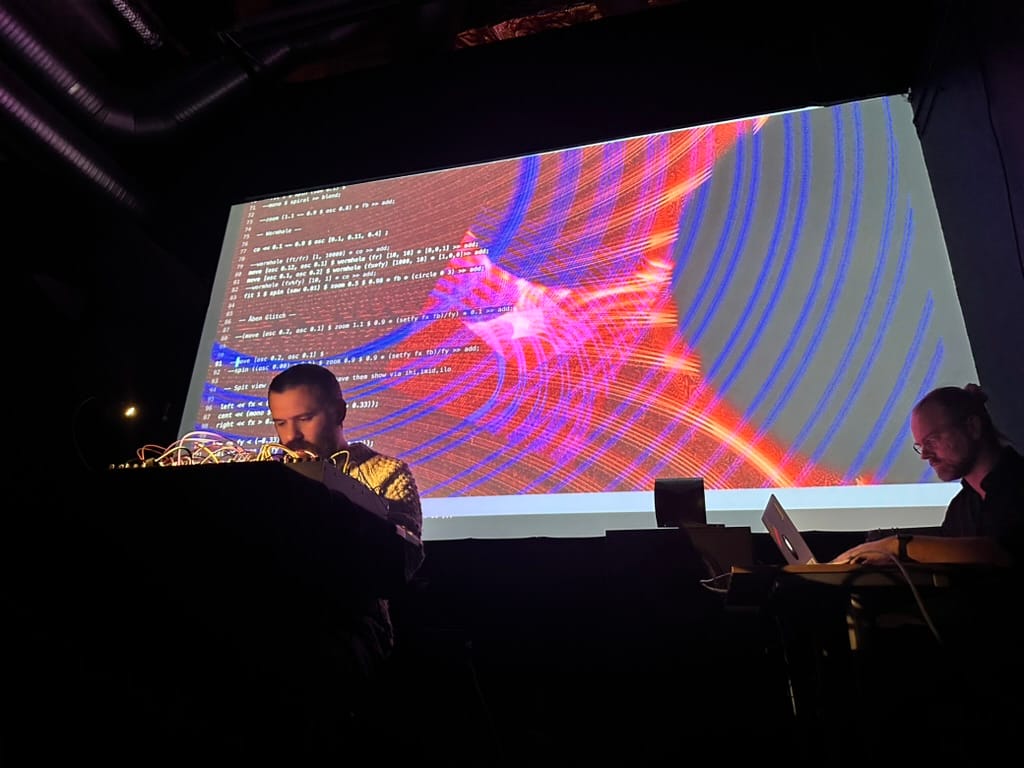
The whole thing went extremely well - everyone was on time, we had no major tech failures, all the changeovers went smoothly. The audience was great too - we had 60-70 people show up over the course of the night. I hosted the evening - introducing each act, and I also ran sound for everyone. Simon handled between-set visuals, and helped on the tech side of things. Most impressively we did it all on basically zero budget - entry was free, performers did it for the love, and the venue hire fee was covered by a local musicians organisation.
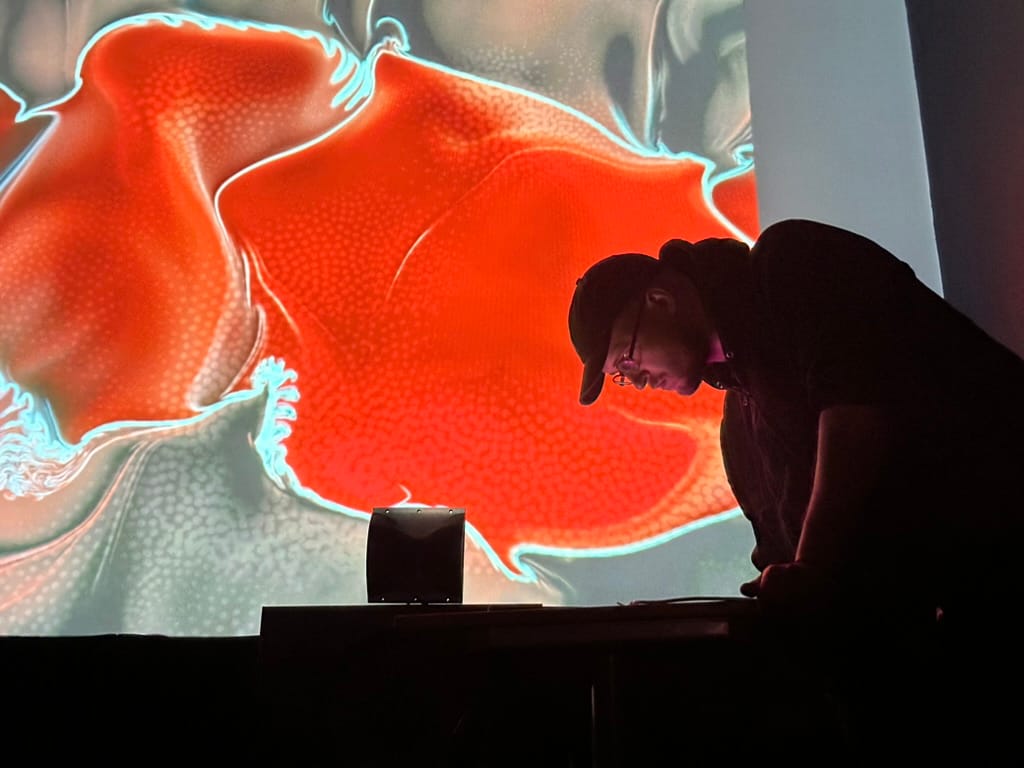
We're planning to do another one, later this year. But before that we're going to get back into meetup mode, work on our projects, and maybe see if there's a good way to create a small digital Pixlar o Ljud community which doesn't overwhelm the physical. Once we've solved that, we'll get back to planning the next event.
Another thing I've been working on is my riso printing adventure. Regular readers will remember that last year I went to an introductory workshop - well, now I've signed up to the community riso studio here in Malmö, and begun working on printing a small zine that I'll distribute in conjunction with my "Doing Creative Work in a Climate Crisis" workshop in April.
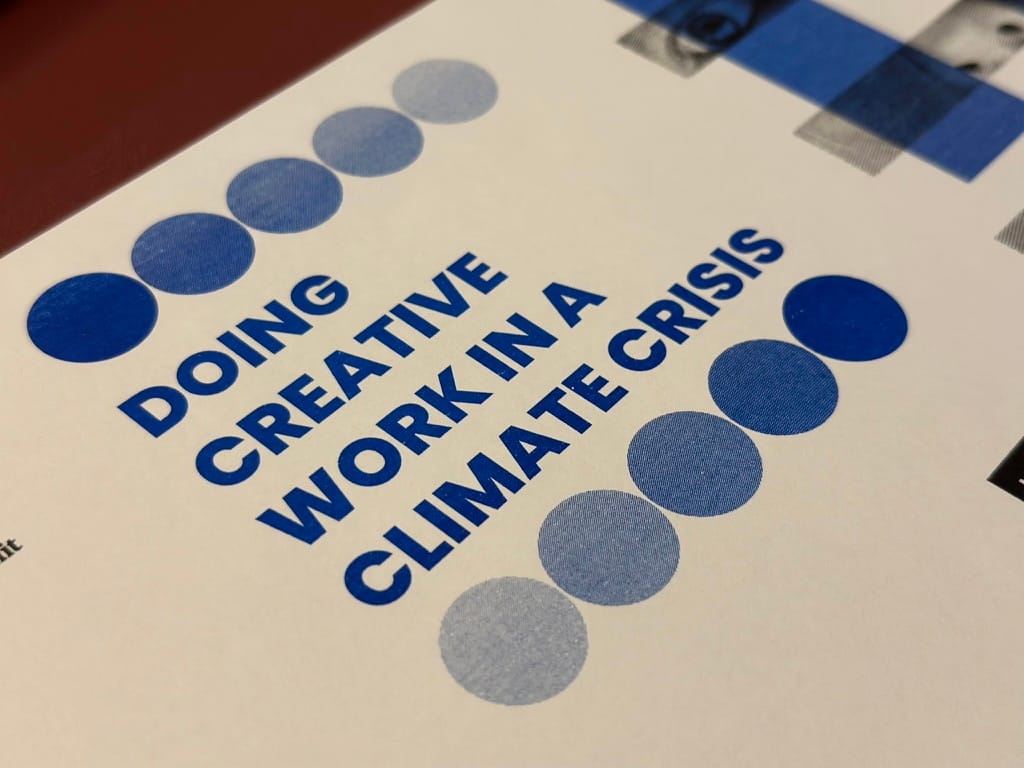
So far, my big learnings have been around prepping the material for printing - working in InDesign rather than Google Docs/Figma (my comfort zone), and carefully separating my colours before I begin. There's been a bunch of learning about how the riso machine works too. But I think I've managed to successfully print all my sheets, and the next step is to cut and assemble them into zines.
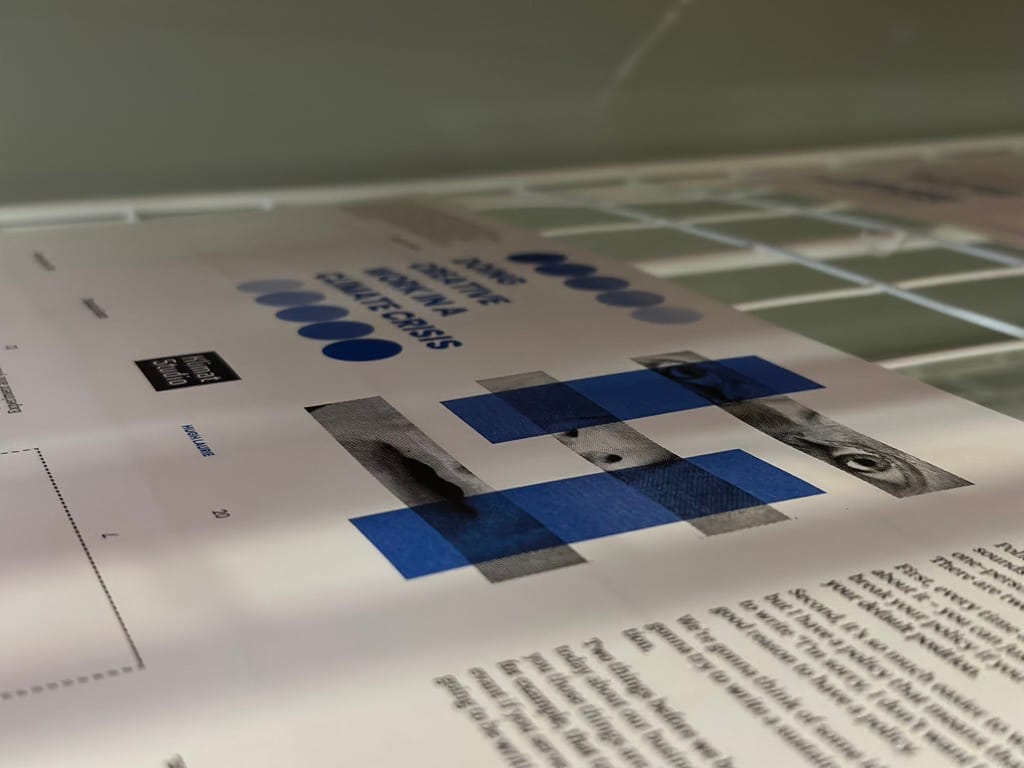
After that, I'm not sure. I've got some older designs that I may turn into posters. I will probably make another zine design for our upcoming Loud Numbers workshop (more on that below). I'm also interested in seeing if I can combine some riso printing with the pen plotter. I'll see how all that goes and make decisions from there.
The Loud Numbers workshop that I just mentioned (and mentioned in my last newsletter, too) is titled "Make Your First Sonification", and it's going to take place on 20 March, in a Zoom call in the afternoon (Europe timezone). We've been meaning to start organising our own workshops for ages, and we've finally got our ducks in a line to start.
 0
0
It's very much a beginner workshop - no data or music skills are needed. The focus is very much on getting people to think about how data can be represented as sound, but also how the way we feel about data can be conveyed at the same time. We've given a version of this workshop a couple of times, and it's always gone down well, so I'm looking forward to it.
More details can be found over at loudnumbers.net/training, but if you want to sign up then do so soon because there are only a handful of places left. If you miss out then we'll hopefully run some more later this year, so sign up to the Loud Numbers newsletter to make sure that you hear about the next ones.
A few times in the past, I've tried to do Jamuary - a community challenge to record some sort of musical sketch every day in January. I've had limited success - my best previous attempt resulted in nine pieces of music. This year, though, I managed to do all 31 - thanks to my aforementioned friend Simon asking me to soundtrack the generative web art sketches that he was doing for Genuary (a similar challenge for visual coders).


Not every single piece is wonderful, but that's not the point - the point is to put the hours in and keep iterating. I'm really happy with some of them, but even the weakest pieces that resulted from the whole thing will make great sample material that I can use in future work.
You can listen to all the pieces alongside the sketches over on Simon's website (probably the best way to experience it), but I've also published it as an album on Bandcamp (probably the easiest way to experience it).

 Bandcamp New & Notable Sep 26, 2020
After my lengthy description last time of my attempts to move away from US tech companies, Lisa Charlotte Muth got in touch to recommend a POSSE approach. POSSE stands for "publish on your own site, syndicate elsewhere". The benefit of this approach is basically that you keep control of all your output and your audience - everything you post on other platforms links back to your own.
 Ben Werdmüller
I wrote back to Lisa that I feel like I'm quite good at the POS but less good at the SE - it's hard to know (a) where to syndicate to, and (b) how to do syndication on e.g. Instagram without it being a bunch of extra work. With the proliferation of picture and video-focused platforms, it's not easy (or always desirable) to host that same content on your own site so easily. I'd love to hear from anyone else who's successfully solved this problem without turning their own site into basically just another social media feed.
A few small updates on that "get off US tech" quest. First, I've successfully switched Browser to Vivaldi and after a little bit of setup it's now working quite nicely for me. The default search engine it uses is StartPage, which is based in the Netherlands and privacy-focused. I was missing the !Bang shortcuts that DuckDuckGo supports, but I found this solution, and more importantly I'm finding the actual results I get from StartPage a substantial upgrade on Google and DDG searches. So give it a try.


Another thing to try is Marginalia Search - a very old-school search experience that lets you narrow down results to blogs, wikis, forums, academia and the "small web". It's actually quite a joy to use, and turns up quality material from a longer time horizon than most search engines.

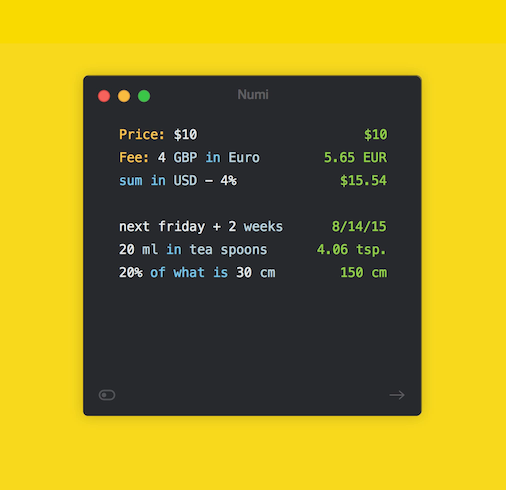
I also experimented a little with a SetApp subscription this month (a monthly payment for access to lots of quality Mac apps), but didn't find the combined experience worth the ongoing subscription cost. The best find was Numi - a small utility that combines a calculator, currency converter, unit converter and more into one small package. I ended my SetApp subscription, and just paid the one-off fee for Numi instead - which I'm now using several times a day.

January saw the first releases from s01system, the small sustainability-focused creative tech lab that I run with my friend Kotte. The first was quite nerdy - a script called Trinket Collector for the Monome Crow that collects voltages and drops them as bursts. We recorded a small piece of music with it, which you can hear here.
 s01system
The second release was Gardens 1-3 - a trio of hour-long ambient recordings that we made in Kotte's allotment last summer in the company of various friends and family. Hopefully it can bring some summer sunlight into your dark winter days.
 Bandcamp Album of the Day Feb 9, 2026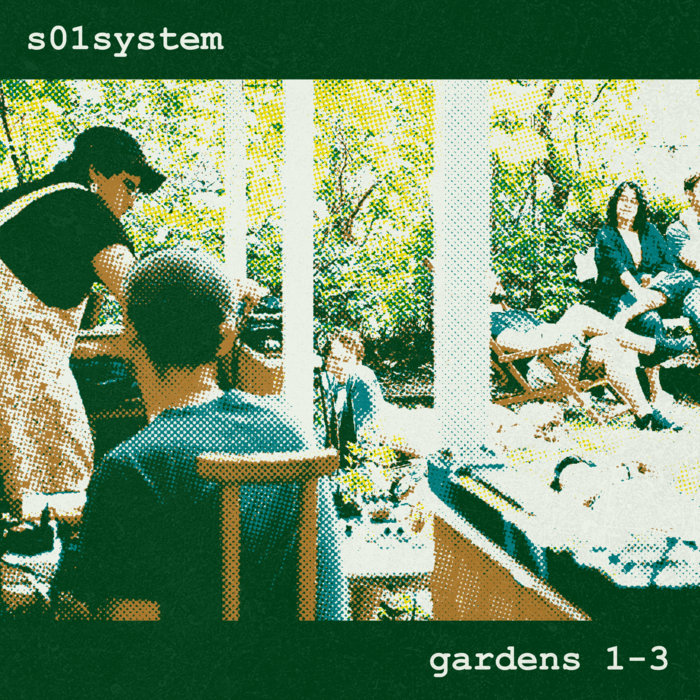
Some recommended reading, several of which I found through Quantum of Sollazzo - my friend Giuseppe's excellent newsletter that you should definitely subscribe to.
- The Wrong Kind of Bubble is a deep dive into the history of economic bubbles. It proposes that there are two types - one that occurs during the initial frenzy of a new technology, and another that occurs when that technology matures. AI, the author persuasively claims, is the latter of the two - and therefore may not leave behind infrastructure for future use.
 Sameer Singh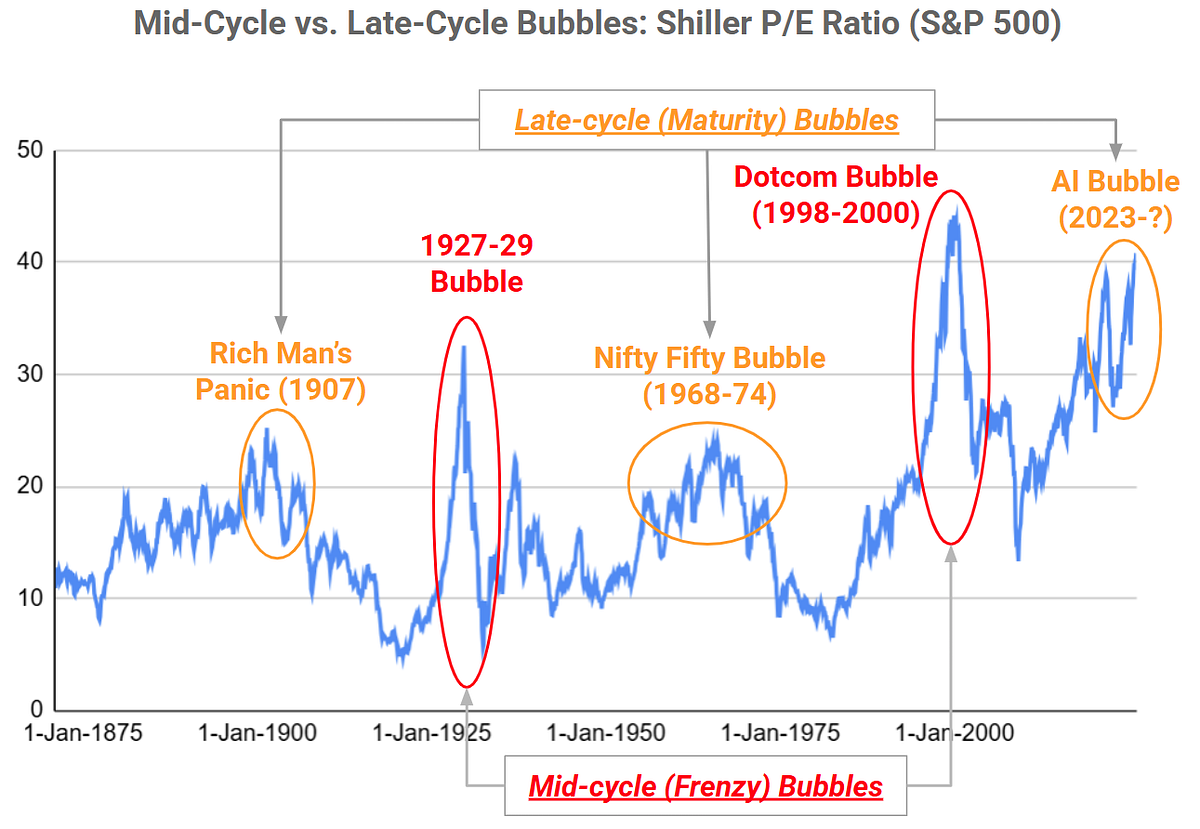
- A Lot of Population Numbers Are Fake is a great reminder that data is complicated and hard to collect, and as a result it can't always be trusted - even if it comes from a high-trust institution like the United Nations or the International Monetary Fund.
 David Oks
- In a couple of days, we'll be hitting Lunar New Year, and the year of the horse begins. But it's not just any horse - it's the year of the fire horse - and the last time we had one of those (in 1966) Japan's birthrate crashed more than 20% due to a belief that women born that year would bring bad fortune for their future husbands. So be warned.
 Tuna Acisu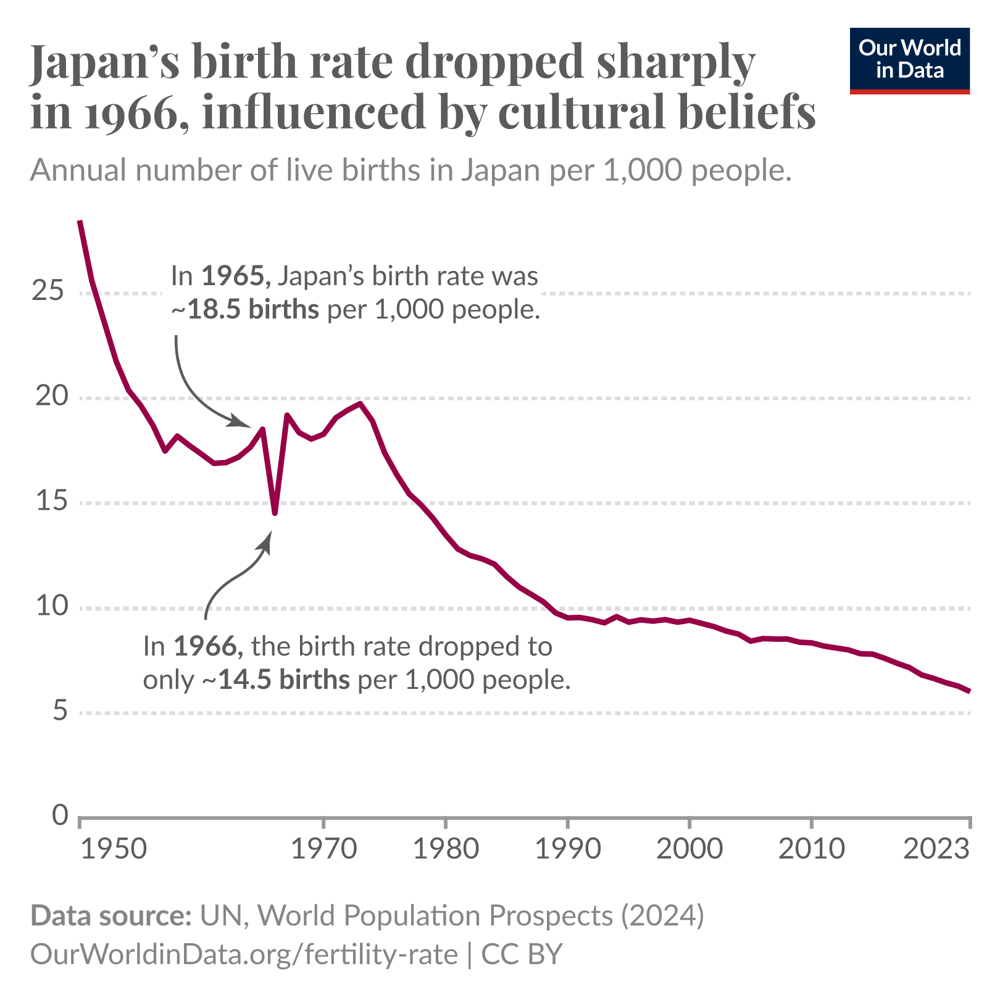
- Robin Sloan's pop-up AI newsletter is producing some really chewy things to think about. I really loved this instalment, which serves as a timely reminder that despite everything the internet still has edges: "Software cannot, in fact, eat the world. Software can reflect it; encroach upon it; more than anything, distract us from it. But the real physical world is indigestible."


- Finally, your regular reminder that Substack is very happily taking a cut of subscriptions to Nazi newsletters. If you use Substack, or you have a favourite online writer who does, then leavesubstack.com is a great resource for switching to another alternative (I use and love Ghost).
 Geraldine McKelvie
That's it for this month. I'll be back in your inboxes again in mid-March. See you then.
Duncan