
Monthnotes November 2026

Every month or so, I share a quick digest of what I've been working on and reading. Here's the latest. More in the series here.
After switching my main email inbox from Gmail to Proton about 18 months ago, I've never been able to make the shift with my calendar. Proton's focus on encrypting everything makes it kinda hard to interface with other apps. Plus the company's been getting some bad press of late. So I decided to jump ship.
Luckily, now that I use my own domain for my email address, this is super easy. I sign up for a new provider (I opted for Fastmail), change a few settings in my DNS, import my archive, and I'm done. Took about an hour and a half (most of which was spent cooking dinner while waiting for 10k emails to migrate). It all went very smoothly.
But then, 24 hours later, I suddenly couldn't log in to Fastmail. Turns out I'd accidentally tripped some kind of filter (maybe by importing 10k emails?) and my account had been banned and emails were bouncing. I quickly shifted my DNS back to Proton to fix the bouncing emails, and then exchanged a bunch of emails with their support team (humans, which was nice) to get it unlocked - which they managed to do in about 12 hours. I got a free subscription month as an apology, which is something I guess.
That was the only blip in the process. Since then, I've been having a great time with Fastmail and I can recommend it. Next up: working on my muscle memory - trying to erase my automatic instinct to open calendar.google.com in my browser when I want to see my calendar, and open calendar.app on my Mac instead.
One of the best synth-adjacent things I've bought in the last few years is the Music Thing Modular Workshop System. It's a small analog semi-modular synthesizer with a digital brain. There's a good miniature explainer pdf titled "what would someone like me do with a tiny modular synth?" if you want to read a bit more.
 Tom Whitwell
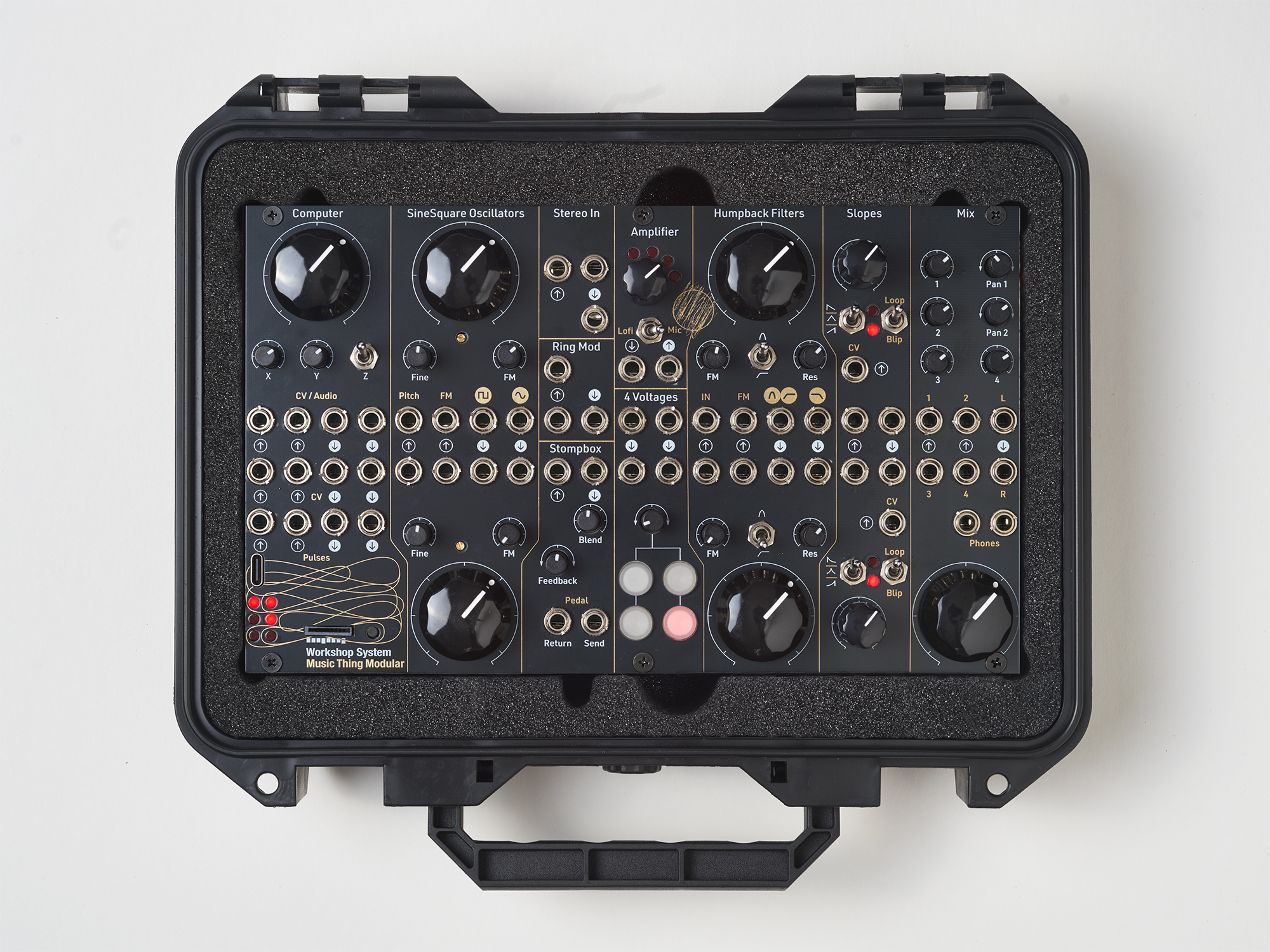
You can use it like you'd like any regular semi-modular synth - patch the two oscillators up to do wild cross-feedback, apply LFOs or envelopes, hook up a pedal for FX, or use the inbuilt contact mic to do noisy modulation. But! You can also write tiny programs onto small physical cards (which look like, but are not, microSD cards) and then use those programs to control the rest of the device.
And those program cards - woah. There's a huge group of people writing immensely cool software for them. Some of my favourites are card 123 (dawn chorus - a drone with birdsong and chimes that changes as the sun rises in the real world in your location), card 41 (blackbird - a lua playground where you can run crow scripts), 62 (biomimicry - a collection of physics engines inspired by nature) and 42 (backyard rain - which plays a recording of rain in someone's back garden, with configurable rain intensity). There are a bunch of more normal synth things too, like MIDI functionality or sequencers, but what can I say - these are the kinds of things I like. Honourable mention goes to card 666, which runs Doom (of course it does).
Last week I attended a workshop about Spirit Lab - a program card that'll be released fairly soon. It's about Electronic Voice Phenomenon - a ghost-hunting technique where you listen for paranormal phenomena in the static and background noise of electronic devices. It was a wild ride, as you might expect, but lots of fun - and the Workshop System is the perfect platform for this kind of arcane silliness. I recorded a short sample of my explorations that you can hear here if you dare.
 Contributors to Wikimedia projects
OK, that's sufficient gushing I think. Wanna give one a go? Here's a virtual edition you can play in your browser. Want to buy one? Here's a list of retailers. Heads-up: the DIY kit is much cheaper than the assembled one, so if you want to save a few bob and you're handy with a soldering iron, or have a friend who is, then buy that. I wouldn't recommend it as a first soldering project, but if you have a few under your belt then it's not too tricky.
I get sent a lot of emails linking to newly-created sonifications, and lately a lot of them have been very obviously LLM-assisted. So for the Loud Numbers newsletter, I wrote a short essay about LLMs as sonification tools - the benefits they bring, but the costs you pay when things are too easy.
 Loud Numbers
Here's a little segment:
When it's easy to make a sonification -- when you don't need to learn a tool -- you end up in a situation where people make sonifications because they can, not because they have a compelling must which drives them through the sometimes-tedious tool-learning process.
This isn't about gatekeeping -- it's good that more sonifications are being made. More sonifications in the world means more listeners exposed to sonification. More creators experimenting with sonification as a medium is good, too, because they might come up with cool, new, weird ideas (especially if they're not following the same tool-dictated pathways that others are).
But if you want to create a project that stays with you, one that you'll still be proud of in five years' time, then here's what we recommend. First, don't start by throwing a prompt at an LLM. Instead, start by figuring out what you want to say -- what your story is, your narrative framing. Then think about who needs to hear it, and how you can share that story in a way that will resonate with them. Finally, put some thought into what you want your audience to do once they've heard it. Write those all up in a doc, in your own words, and only then take it to your favourite sonification tool -- even if that tool is an LLM.
Once your tool of choice has made a first version, don't stop there. Challenge it. Try different data mappings, especially those that feel intuitive, or (even better) those that feel a little odd or dangerous. Focus on the details: the sound design, the visual design, even the typography. Don't let an LLM write any text unless you want the text to sound like it was written by an LLM -- write it in your own voice instead. Once it feels right, once it makes you feel something, test it on friends and family -- does it feel right to them? Does it make them feel things? Does it feel to them like it was made by you, as opposed to a tool?
Read the whole thing here.
I hosted my first Ambient Cafe at Blå Huset (the building that houses my studio space) this month. It's a really simple format - two big speakers, and three hours of gentle ambient music to work to - much like my Workscapes (2012) and Asleep In The Back (2005) radio shows.
In the first instalment, I played Grouper's Way Their Crept; R Beny's Discerned in the Fugue of Streams; Hiroshi Yoshimura's Surround; and the classic of the genre - Brian Eno's Music for Airports.
The next one is on Monday 23 November, from 08:30 to 11:30. It's free, and everyone's welcome. Bring a laptop, a book, or nothing at all, and stay for as long as you like.
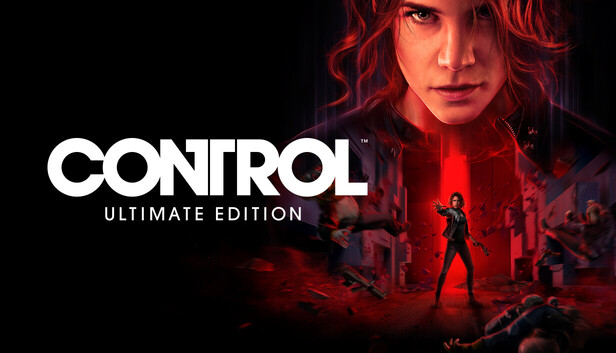
Having finished Cyberpunk 2077 (great first third, incredible world to explore, ending was a slog), I've been looking for something new to play and a friend recommended Control.
It's a third-person action adventure, and pretty easy to get into. But things start getting weird right at the start when you meet a bizarre Finnish janitor and suddenly find yourself named as the new director of the United States Federal Bureau of Control - a governmental agency tasked with investigating paranormal activity, and which is currently under siege by forces unknown. It's one third Tomb Raider, and two thirds X-Files. Spooky, but pretty much never outright scary. The vibes are impeccable.
But vibes aside, what I'm enjoying the most is the rhythm of the game. You're jumping back and forth all the time between exploration, puzzle-solving, and combat modes. In combat, you're forced to actively switch between shooting and paranormal abilities, as both have an energy bar that drains fast but also recharges fast. There's a lovely mix of exploring new locations and returning to those already explored as you unlock new abilities. It feels great to play - almost more like a Metroidvania where you're picking your way through a large, active world rather than being led by the hand through an on-rails story where nothing happens "out-of-shot".
If that sounds fun, then give it a play (though maybe wait for a sale - it came out in 2019). It's available on Steam and no doubt other platforms too. As soon as I'm done, I'm pretty sure I'll be picking up the recently-released Sequel - Control: Resonant.

Finally, several of you will know that I'm a huge fan of the 1990 Christmas movie Home Alone and its first sequel - Home Alone 2: Lost in New York. Every year, I watch them both as a double bill at the start of December to kick off the holiday season, and usually I invite a few friends over to join.
Well, I've now started volunteering at a local community cinema - and so this year I'm doing my annual screening there. On 29 November, at Hypnos, we'll be playing both movies with a short intermission in between. You'll need a Filmklubb membership - which costs 150kr for 60 days and allows you to come see as many films as you like during that time.
 admin

Quite proud of myself that I'm finally managing to successfully climb some 6B boulders, after being stuck at a 6A+plateau for six months.
Also, I've noticed that I'm finally starting to rebalance towards getting a bit more creative input in my life, rather than just constant draining (but fun!) output. Maybe it's the turn of the season and the arrival of the darkness. But it feels good.
That's all for today. I'll be back in your inboxes again in mid-December. Speak then.
Duncan