
Monthnotes August & September 2026

Every month or so, I share a quick digest of what I've been working on and reading. Here's the latest. More in the series here.
Last month I hacked a vacuum cleaner(!). A Roborock S5 Max, to be precise. Our new studio is connected to a corporate network that doesn't allow IoT devices to phone home to their corporate servers - which unfortunately had the side-effect of making the vacuum totally non-functional. Luckily, there's another option. Valetudo is an alternative firmware for many popular robot vacuums, which removes the dependence on external cloud servers.


How easy it is to install depends on your specific model. On mine, it was a bit scary - I had to disassemble the robot to the point where I could access its circuit board (removing 40-odd screws and miscellaneous plastic pieces, though at least this let me clean it comprehensively in the process). Once I had access to the circuit board, I had to use a paperclip to bridge two connections, while pressing the power button, and then use a Linux computer to quickly upload a script that replaced the stock firmware with a new one. Then it was just a matter of getting network access and configuring it all.
Luckily it all went flawlessly, so now we have a robot vacuum that never needs to phone home ever again and works great, even on the corporate network. Yay for hardware hacking.
I'm not very good about tooting my own trumpet around little successes, so I should probably mention that the Seinfeld Chronicles project that I mentioned last month got featured in the New York Times' "The Good List" newsletter.
They wrote:
The result is quirky, obsessive and, like the show itself, an entertaining exercise in overanalyzing the minutiae.
If you missed it, then set aside 10 minutes to go have a play.


As a migraine sufferer, I loved Public Domain Review's collection of historical images that attempt to depict the weird visual hallucinations that some people get alongside their migraines.
 Text by Hunter Dukes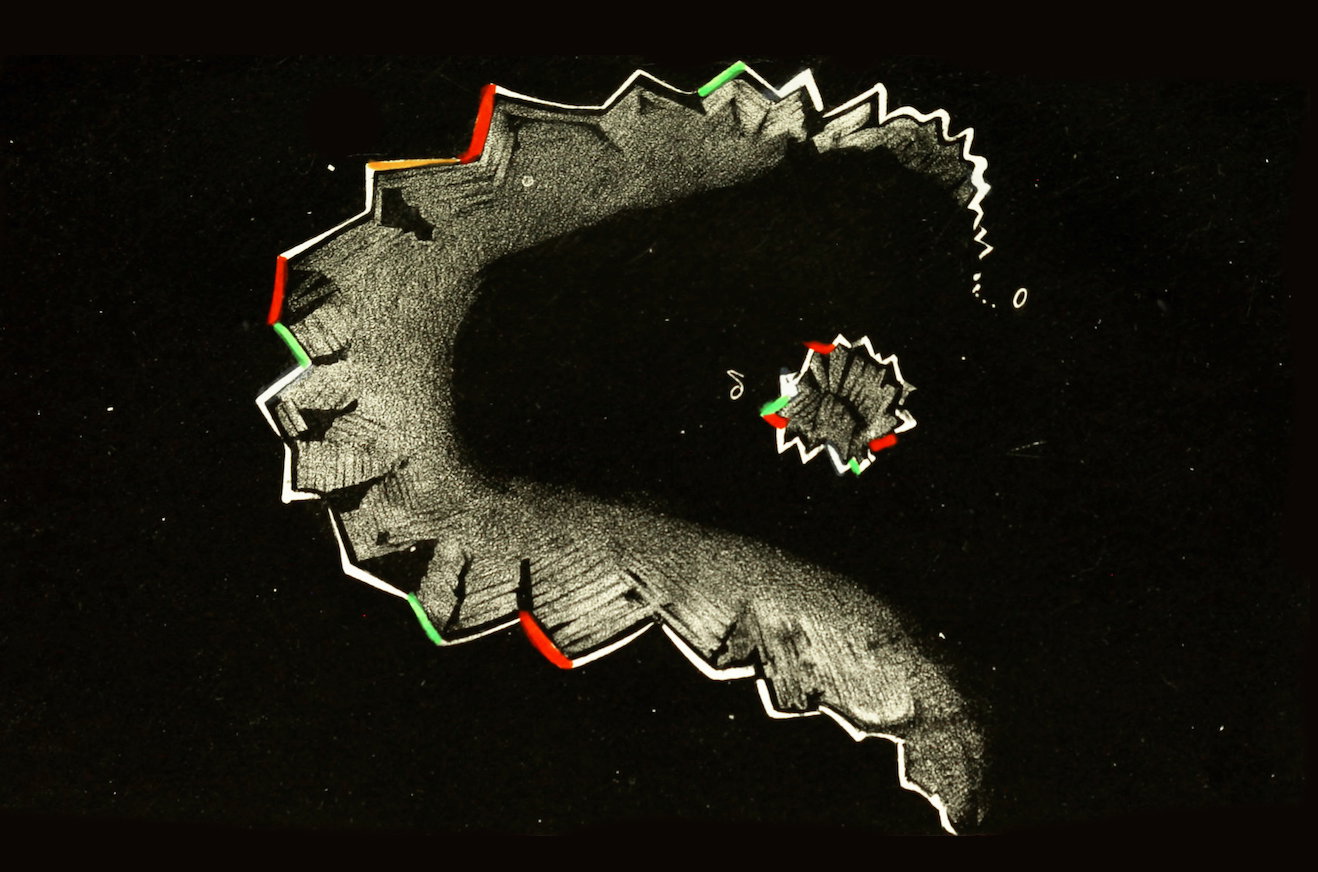
Here's a snippet:
John Fothergill’s description of a headache he suffered in the winter of 1778 is thought to be the first anglophone account of a migraine’s ocular disturbances. He saw “a singular kind of glimmering in the sight; objects change their apparent position surrounded by luminous angles, like those of a fortification. Giddiness comes on, headache, and sickness”.
At one point in medieval times, migraines were considered to be divine revelations - with mystic Hildegard of Bingen's revelations depicted in a manuscript called Scivias, completed in 1151.
I don't get auras with my migraines - just extreme light sensitivity, nausea and headaches. But since discovering sumatriptan a few years ago I've been more more able to manage them. If you're a fellow sufferer and you haven't tried it, I can definitely recommend giving it a go.
From 2004 to 2007 I had a Livejournal, which has been sitting dormant for the best part of 20 years. I hid most of it a while back to the public, but an old friend and newsletter reader (Hi A!) wrote to me and mentioned that they could still see my posts, and that the site was now owned by a Russian company, so I figured it was time to archive personally and delete.
It was weird reading some of my 2004 scribblings again - much of it was recognisable, but the style and tone was very different to how I write today. I guess a decade making a living from writing sanded off some of those edges. Either way, I've now got them all as Markdown files, so if I ever want to do any snooping back into my past self's opinions (of which he had plenty) then I can do so.
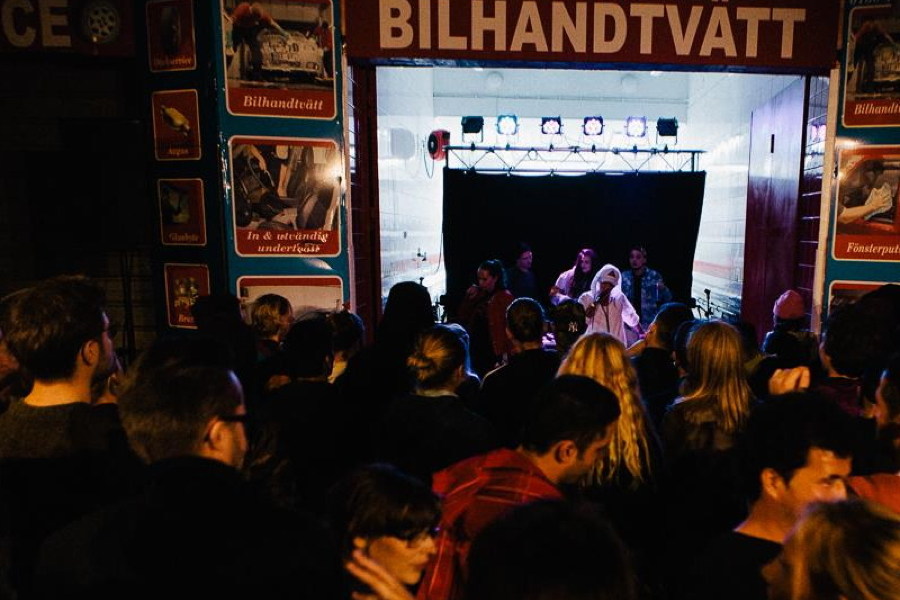
Back in January, and also in June, some local artists and I rented out an independent cinema here in Malmö and put on a showcase of the audiovisual talent we've been accumulating through a series of monthly meetups called Pixlar o Ljud (pixels and sound - for the curious, ljud is pronounced something like "yude").


Now we've done a third event! On the 4th September, we booked Hypnos again for an audiovisual extravaganza - with five musicians partnered up with five people who work with live visuals. It was packed - courtesy of the street festival outside and some rather changeable weather conditions, and we had heaps of fun.
For the first time, I joined in with the performers too - not to do music, but to do visuals with a system I've been developing that I call the Dial-a-View. It lets you use a gamepad to scroll very very slowly across satellite images that I've curated from different parts of the world. You can explore in any compass direction, rotate, zoom in and out, and use various different transition styles to jump to other locations. It worked great! The perfect visual accompaniment to Paul Khadra's ambient music, who I was partnered up with.
You can watch the whole performance here:
One thing that's nice about doing things in that cinema is that it's literally downstairs from our new studio, which we're bedding into nicely. I'm spending most workdays there now, and a few evenings and weekends too. Having three rooms dedicated to different things means it doesn't feel like I'm staring at the same four walls, and having other creative collaborators dropping in and out is also lovely. It's working very well so far - and we have big plans to make it work even better in the future.
Now that the Pixlar o Ljud showcase is over, our next project is an installation called >BLOOM<, which will be a part of the Sonic Citizens event at the end of this week. It involves a light table, a bunch of interesting objects, a webcam, and a quad speaker setup. I'll write more about it next time.
I'd like to recommend this article from Robin Sloan which I think threads the needle rather well around where the usefulness of LLM tech is at in summer 2026, balancing up the excitement around its capabilities with deep disquiet around how those capabilities were arrived at and the consequences of continuing to pursue them.

In my favourite section, he writes:
The moment of asking for an app and getting it is dangerous, because you feel like you accomplished something. You didn’t — not really. You can briefly enjoy that feeling, but I believe you must quickly discard it. The risk is that it pulls you into a loop, endlessly tinkering, refining, improving … and never emerging from your cozy AI workshop. You do, at some point, have to use your tools. You do have to actually make something.
He also proposes four rules for software created with the help of AI agents:
- You must actually and consistently use anything you build for two months before posting about it.
- Ideally, never post about it.
- Don’t let the AI agent name the app. You pick the name.
- Don’t distribute the app, not even for free. Don’t post the code on GitHub. This is not software for glory; it is software for you.
Breaking all of those rules immediately, I do want to tell you about a little app that I put together (with an LLM) for a sonification project that I've been working on. I share it because I think it genuinely could be useful for others and not just me. It's called datarates, and it lets you sonify rates of different things.

Here's what I wrote in the next Loud Numbers newsletter about it, due to go out in a few days:
This is useful for any situation where you want to sonify a constant real-time flow of data - birth rates, financial transactions, things accumulating or draining. Here’s an example: let’s make a quick sonification of how quickly CO2 is accumulating in the atmosphere. In 2025, the EU says global carbon emissions were 54.1 billion tonnes of CO2 equivalent. Two minutes in a spreadsheet tells us that 54 billion tonnes over a year translates to 1,714 tonnes per second. Inverting that tells us that 1,000 tonnes of CO2 is released every 0.58332 seconds. Put that into Datarates in the “rate” box, select “seconds apart” (or click this link for a pre-filled version), hit “preview”, and you get to hear the insane pace that we’re changing our climate. Sample it for your next techno track, if you like.
Give it a spin over at https://datarates.loudnumbers.net.
That's all. I'm hoping to be back in your inboxes again in mid-October.
- Duncan