Monthnotes June & July 2026

Every month or so, I share a quick digest of what I've been working on and reading. Here's the latest. More in the series here.
Let's kick off with a new project! Two years ago, dataviz legend Andy Kirk reached out to my sonification studio, Loud Numbers, to ask if we could work on a project for him related to the TV show Seinfeld. That project is now out in the wild - presenting: The Seinfeld Chronicles.

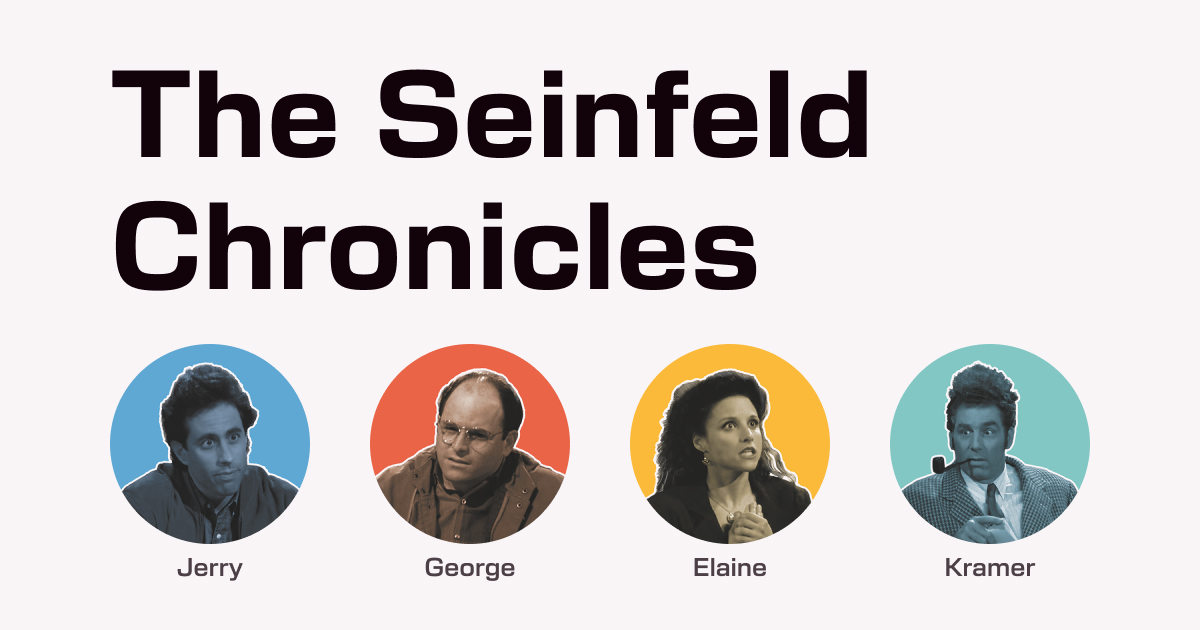
It's a huge, data-driven deep dive into every episode of the show - looking at who's in which scene, who's causing laughs, where the scene is set, yada yada yada. But what's lovely is how it's presented. From the very start to the end, the experience has been hand-crafted to reflect Andy's passion for the show and his love of all the nerdy trivia related to it.
At Loud Numbers, we were responsible for two things - the broad sound design of the experience, and a complex data-to-sound engine that powers the episode explorer. In the latter, we turned every episode of the show into a custom piece of music inspired by the Seinfeld theme tune. Each scene becomes four bars of music, with the instrumentation reflecting who's in the scene. The "wildness" (for want of a better word) of how that instrument is being played reflects how many laughs that character is causing. So if you hear George's saxophone tootling away in the background, then he's just present, but if he's soloing wildly then he's the main character in that scene. I think it might be the world's first sonification to feature slap bass so prominently.
You can hear us explore the project and explain a bit more about how it came together in the final episode of Andy's video podcast, Explore Explain.
 Andy Kirk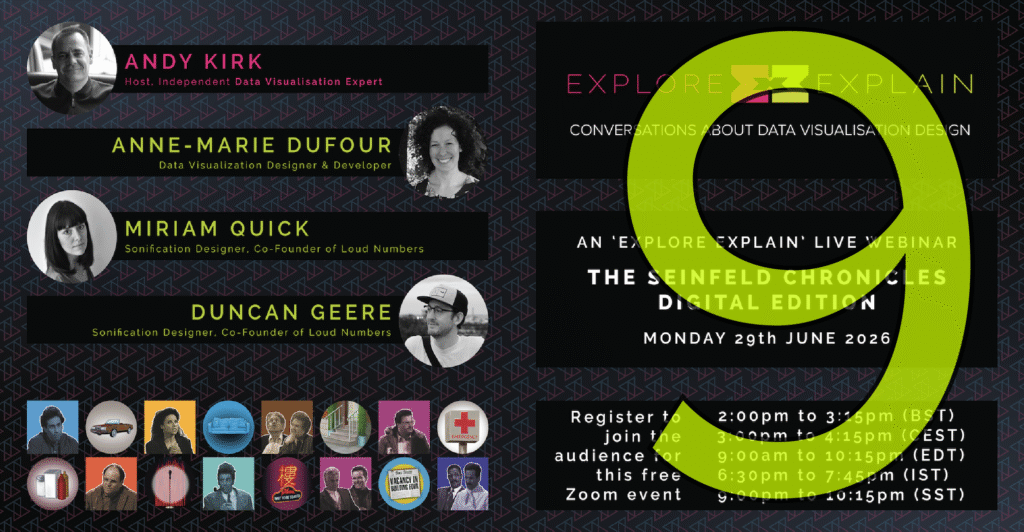
This was a super fun project to work on, and a real labour of love over a long period of time (especially as someone who found Seinfeld relatively late in life myself). Grab some pretzels, or junior mints, or a big salad, or soup, and give it a spin. Serenity now!
Malmö, where I live, runs a democracy festival in the Spring called "Malmö Möts" (Malmö Meets), and this year they invited Rob Hopkins - author and founder of the Transition Towns network - to give a talk, a workshop, and be interviewed on stage by yours truly.
We only had 20 minutes, and a lot of ground to cover, so we didn't get to go very deep into things. But I asked how we make sure that everyone has time in their lives for the kind of community work he advocates for, and how we can use democratic tools to handle conflicting visions of the future, among other stuff.
His book, "How To Fall in Love With the Future", is lovely (a breezy, optimistic read) - and I also got the opportunity to press a copy of my "Doing Creative Work in a Climate Crisis" zine into his hands, so that's nice. Plus it was just nice to be a part of the city I live in coming together to talk about how we talk to each other. That feels like an underrated thing these days.
 Duncan Geere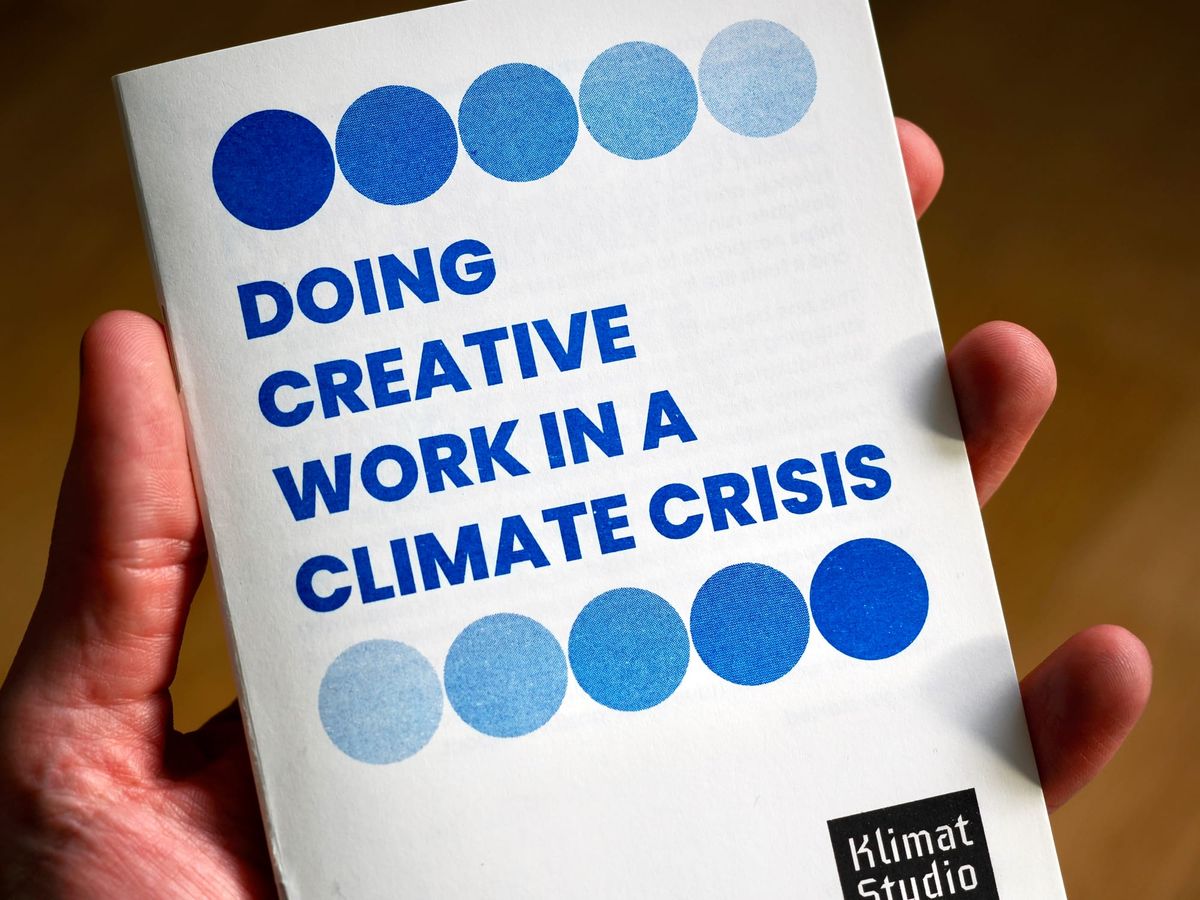
Last year, I spent many months working with the team at Conservation International to produce a report called Africa's Nature Transition: A Roadmap for People, Nature and Climate.
It's a spiritual successor to several of my older projects. The Exponential Roadmap reports that I edited for FutureEarth, which had a global, all-sectors perspective, andthe Exponential Roadmap for Natural Climate Solutions that I edited for Conservation International, which zoomed into to how protecting, managing and restoring nature can bring down emissions.
This new report looks at natural climate solutions in sub-Saharan Africa, specifically. It was co-developed with a bunch of local partners, and tackles many of the thorny questions around development. In particular, it pays a lot of attention to ensuring that local livelihoods are protected while still reducing emissions.
The most challenging bit in my editorial work was bringing together the work of many disparate authors into a single voice, keeping consistency, and ensuring that the whole thing was jargon-free (always tricky in NGO contexts!) and accessible to its intended audience.
If that sounds interesting, then grab a copy of the PDF over at the Conservation International website.

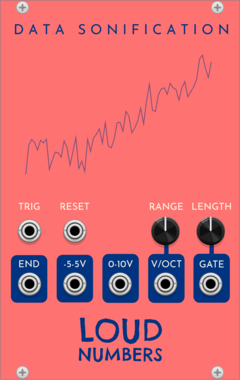
I've rolled out a chunky update to the Loud Numbers VCV Rack module - a tool for doing data sonification in a virtual modular synthesis environment.
The update adds a bunch of quality-of-life features, and stability improvements. The biggest addition is that you can now click a datapoint on the module's in-built visualization of your data to cue that point, and begin playback from there. It also now supports CSV files where data isn't separated by commas (semicolons are common in Europe, where thousands are separated by full stops and decimals separated by commas), and handles missing datapoints much more elegantly.
On the backend, I've substantially improved the logical flow of how the module plays each datapoint and when it jumps to the next one - particularly when a reset trigger is sent. It should be much more robust and predictable now, behaving like other step sequencers. Oh, and I solved some long-standing intermittent crashes that users reported when loading specific CSV files.
A few years have passed since I last touched the code on this, and the main reason is because VCV Rack plugins have to be written in C++ and I find C++ so much more difficult to get my head around than other languages, like Javascript, Python, or Lua. However, we now live in a world where we have generative AI models that can write working C++ code. As much as I still ethically object to these technologies, using them to deliver some long-asked-for updates to a tool that I would otherwise no longer be able to maintain feels somewhat justifiable. I would love to be able to pay money to a human to do this, but C++ coders don't come cheap, and the income that the tool brings in is zero.
All of which to say: if you like sonification and modular synths and you haven't tried the Loud Numbers VCV Rack module in the last week or so, then go give the new version a spin.

Earlier this year, the European Women's Lobby asked me to help them with some editorial and layout work for a project they're running called "Women in Climate". They had a 10-page policy brief that they wanted turning into a nice PDF, and they wanted a two-page summary document too - all in the organisation's style guide.
This was an interesting one, combining a bunch of the different hats I wear on a regular basis - editorial, graphic design, layout, subediting, etc. The results have been published in a wide collection of languages here.


In June, we ran another successful Pixlar o Ljud showcase - and we're doing a third at the start of September.
Pixlar o Ljud (which means "pixels and sound") is a meetup that I cofounded, bringing together artists and musicians using programming and technology as a creative tool. We've been running it for almost a year, and we've built up a lovely crowd of regulars. Since January, we've also been doing irregular "showcase" events where that community can show off what they've been working on to a wider audience, experimenting in public.
Our June event was wonderfully diverse - we had ambient music with spoken word, electronic singer-songwriter, effects-laden synths, noisy techno, and a headline performance from the fantastic s8jfou, whose audiovisual breakbeats/video mashup combo left everyone's jaw on the floor.

We've booked in our first meetup for the autumn on 23 August at STPLN in Malmö, and another showcase event at Hypnos Theatre in Malmö on 4 September. If you're in the Öresund region, then I'd love to see you there! More details and signup at pixlaroljud.xyz.


At the start of June, I moved into a studio in Malmö with some friends and we're starting to get things set up nicely. It's a wonderful place - next to a bread factory (great smells), close to the local climbing gym (I'm still bouldering, somehow I went four times last week), and right in the heart of Malmö's "culture sound zone" where you can legally make as much noise as you want to, day or night (we're not making that much noise).
The studio is quite a large and flexible space - we have a room with big windows and desks in, a workshop space where we can solder, 3D print, make a mess etc, and a music room where we can be loud and try out weird sonic experiments.
A big plus for me is sharing the studio with a bunch of creative friends who bring their own ideas and practices - many of whom I've collaborated with in the past. People have been sparsely around so far, due to the holidays, but come September I'm hoping everything will come together into something substantially more than the sum of its parts.
After rage-quitting Silksong last year, finding the difficulty curve simply too steep, I can happily report that I have now not only completed it but 100%ed it.
How did this happen? I did not, you'll be sad to hear, "git gud". Instead, I installed a mod. A mod that does one thing only - every time the game inflicts two pips of damage on you, you only actually take one. This tiny tweak was enough to rebalance the difficulty juuuust sufficiently so that the game turned from a slog into exactly the right level of challenge.
This, I think, speaks to one of the best things about PC gaming. If a game doesn't work for you, you can change it (with the help of the community, though in the future perhaps this'll be AI-driven too). I was able to turn a game that I really wanted to love but found too frustrating into one of the most profoundly enjoyable videogame experiences I've had in a while. My partner is now playing it and she's also tuned the difficulty to her liking - adding regenerating health, more currency, and auto-recharging weaponry. She's loving it, in a way that she would never do at the default difficulty settings.
I respect Silksong's developers' decision not to offer their own customisable difficulty settings - they have an vision for what they want the game to be, and that's fine. But if I'd bought this game on Xbox or Playstation, then I'd have put it down less than half way through and probably never picked it up again. So yay for mods, and yay for PC gaming.
I've been taking advantage of some of my holiday time over the past month to mash together some of the things I love into new creative practices. One quite promising avenue of experimentation has been around creating live visuals for music performances using satellite imagery.
I don't think I'm alone in that I can lose hours scrolling around random places in Google Maps and Google Earth. I find it immensely interesting to see what's going on in in the Sahara, or the Amazon Rainforest, or inland Greenland, or Siberia. To follow tyre tracks through the desert for a while, or a lone road on a tiny island in the South Atlantic.
So far my stack involves running Mapbox GL JS on a local web server, and then tapping into that through Touchdesigner so that I can control the motion, contrast multiple panes, and apply image effects. It's very early days (and it needs a fairly strong internet connection to work), but it feels like there's something here. Maybe I'll experiment a little at the next Pixlar o Ljud showcase...
Take some time out of your week to peruse Marcin Wichary's love letter to custom keyboards. It goes deep, so be prepared to be sucked in, but you'll come out of it with a million great ideas for making your keyboard work better for you.
It’s fun to slam big keys without thinking, and it’s fun to experience the mastery of precise combinations of meticulous keyboard shortcuts. It’s great to see things on the screen that react to what you’ve done, especially if those are things that really understand how you work. And it’s magical to watch your fingers do things seemingly on their own while you’re preoccupied with deeper things, just because you set up something that allowed motor memory to blossom.
Read the whole thing here.
Marcin Wichary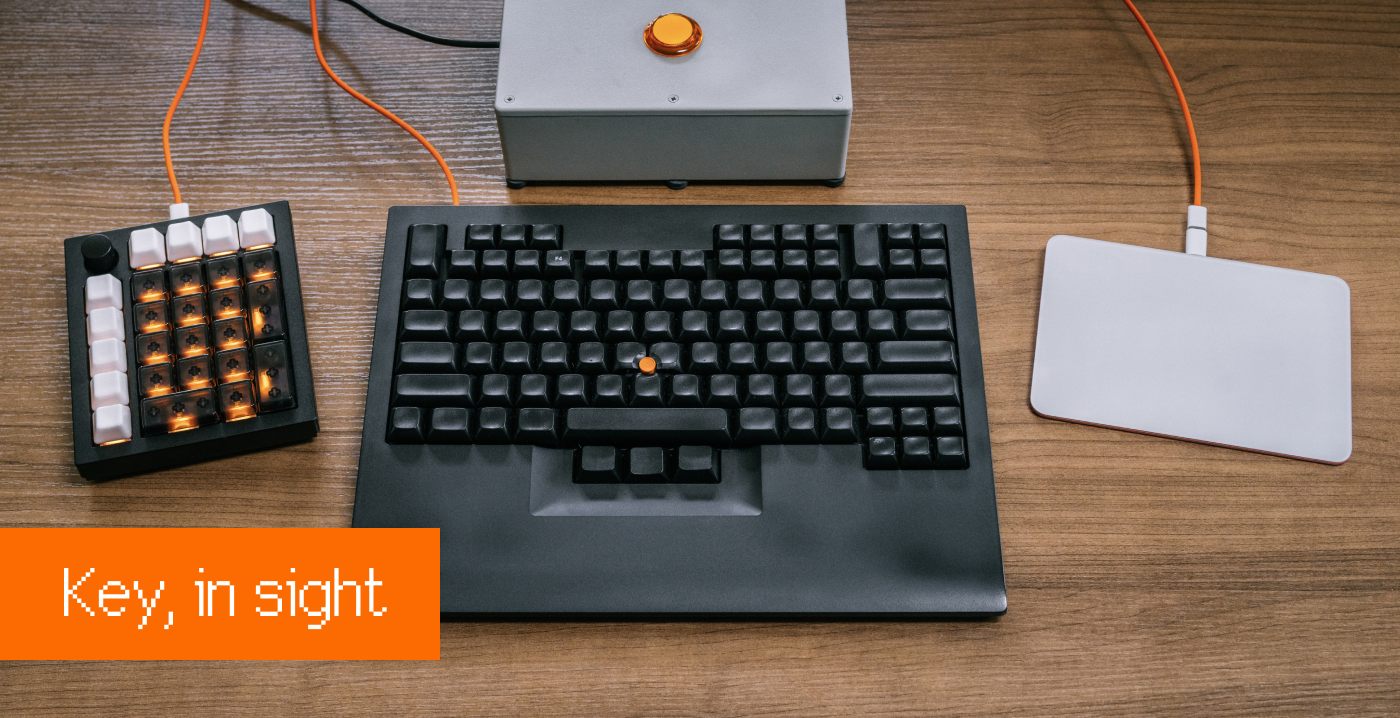
If you're anything like me, you may have accumulated a few too many volunteer commitments over the years that you find it awkward to get out of. Well, I'm happy to share my discovery that someone has decided that each solstice will be "Volunteer Amnesty Day", where you can take an inventory of your commitments and decide to end the ones that aren't working for you.
Once you've decided to end a commitment, say so publicly. Feel free to point to this page as a way of saying: I need to put a few things down. I hope other people pick them up and carry this work forward. But even if no one does, I need to stop, or at least pause for a while.
Read more at volunteeramnestyday.net.
Finally, it's worth reading this article from a couple of days ago about what 38C days feel like in Paris. I'm in Germany this week, for a conference, and the forecast is 35C on Thursday. Let's see how that goes :/
 Sarah Wilson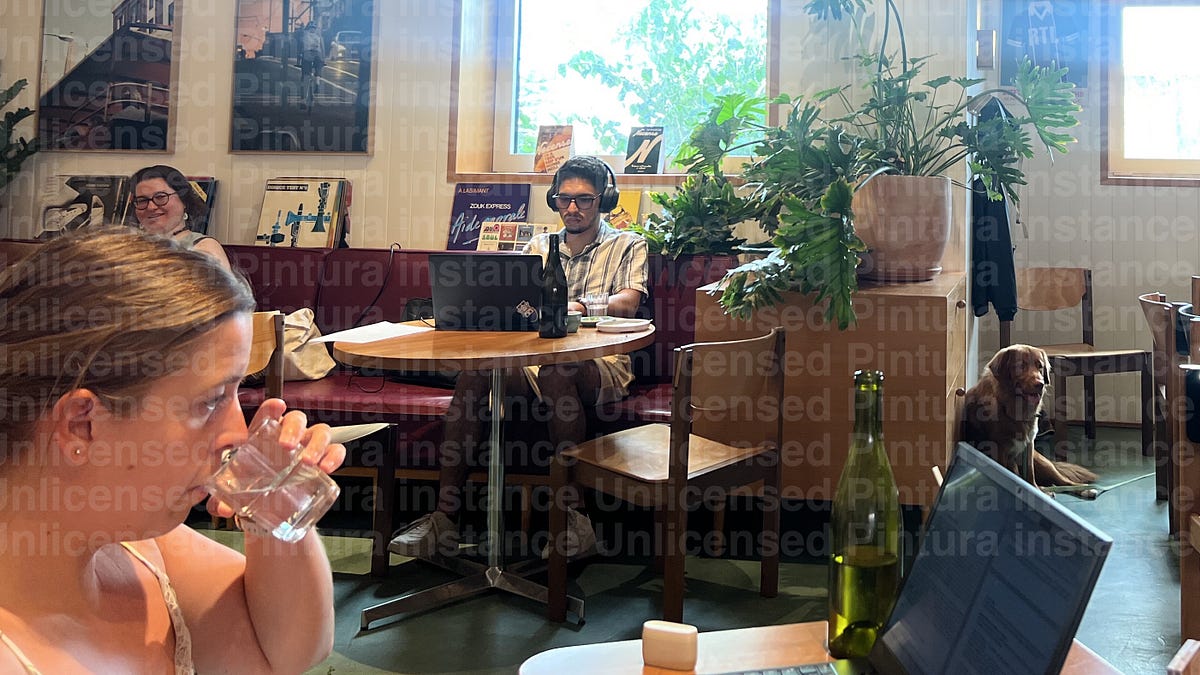
Phew that was a long one. Sorry my cadence over the last few months has been a bit sporadic, but that's what comes having, er, too many volunteer commitments. Maybe I should work on that. In the meantime, please hit reply and tell me what you've been up to. It's always lovely to hear from people.
I'll allow myself a little breathing space, and then try to be back in your inboxes again in the middle of September.
See you then.
Duncanxx